Join us for DataOps Day Cleveland on October 2.

Every system you add to the plant floor creates another solution to integrate, secure, and maintain. If a system adds time and cost, then measuring its ROI is critical.
That’s why we sponsored a study by independent analyst firm IDC to measure the business value of HighByte Intelligence Hub. The study provides a detailed, quantifiable analysis of the success that Intelligence Hub customers have experienced in their journey to better leverage industrial data for Industry 4.0 use cases and AI readiness. The study uses an anonymous interview format to gather objective facts around the outcomes driven by our software. This post aims to highlight some of the most impactful insights from this IDC study and share additional resources you can use to build your own business case.
Study Methodology
The IDC business value study follows a proven methodology that gives customers who have been using HighByte Intelligence Hub in production for more than one year an opportunity to share details of their experience and success with the product in an anonymized format.
As part of the research, IDC conducted in-depth interviews with seven HighByte customers, each operating in different industry verticals, from logistics to polymer manufacturing. They represent production happening in the United States, Brazil, Sweden, and Switzerland. The range of revenue and employees varies widely, embodying the breadth of industrial companies that recognize value from an Industrial DataOps approach.
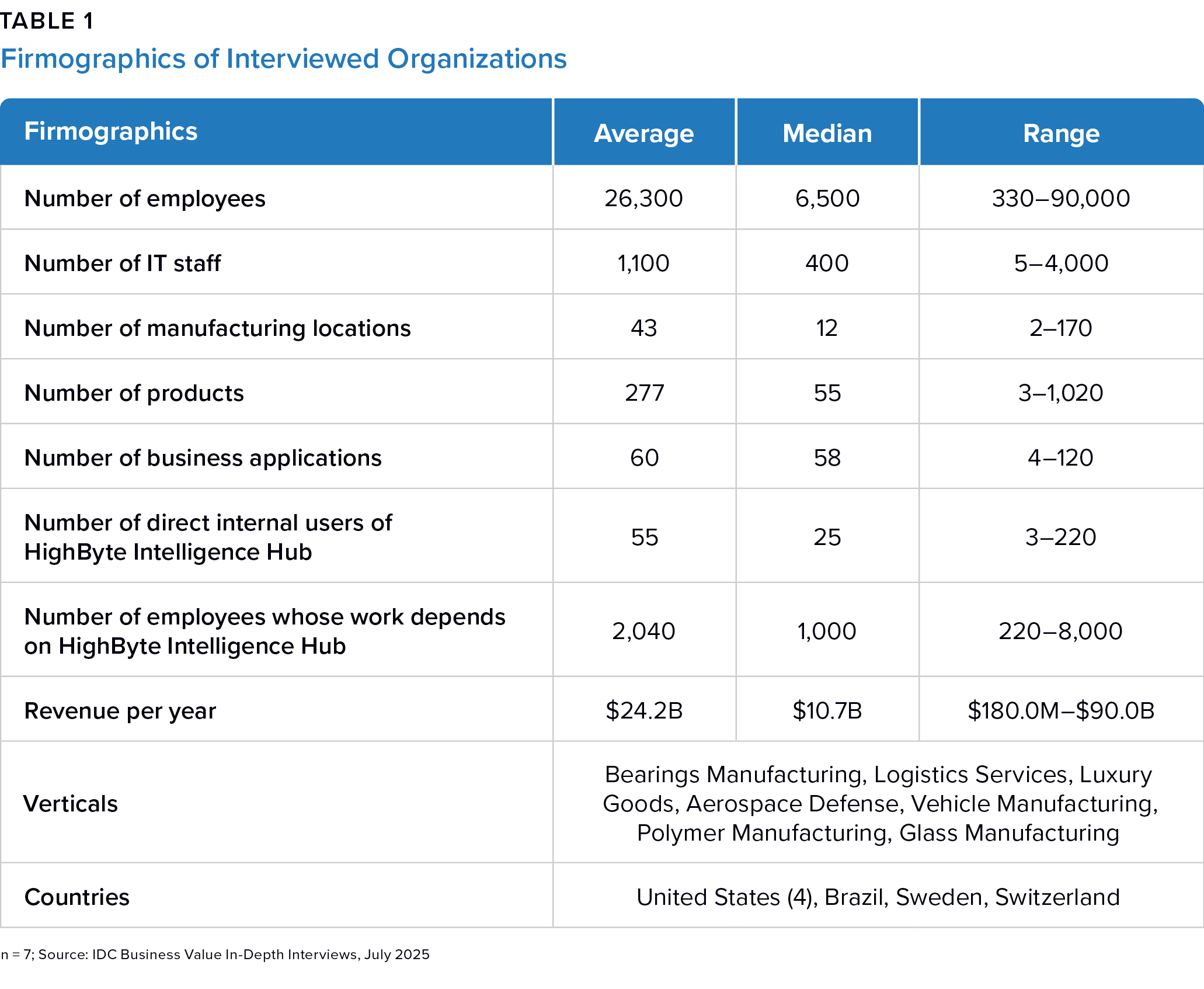
Table 1: Firmographics of Interviewed Organizations
Source: IDC White Paper, sponsored by HighByte, The Business Value of HighByte Intelligence Hub, Doc. #US53756625, October 2025.
Key Results
The results offer insight into the value of implementing HighByte Intelligence Hub and the challenges that led manufacturers to invest in this solution.
As one vehicle manufacturer shared, “Industry 3.0 generated vast amounts of data, but turning it into useful information is the real challenge. Point-to-point integrations work at small scale, but quickly become unmanageable. To enable Industry 4.0, we need clean, contextualized data that’s easy to access and use for informed decision-making.”
Let’s look at a few key ROI metrics, broken down by business results, plant floor savings, and impact on IT and OT teams.
Productivity, Speed, and Scale
Participating organizations completed new projects 339% faster than was previously possible. That is a 4x increase in productivity, providing capacity to accomplish more Industry 4.0 projects without demanding a parallel growth in the resources required to do so. In one example, a bearings manufacturer deployed a new OEE system across 20 production lines in a single week, a rollout that would have taken more than a week per line using its previous methods. This is the practical advantage of building a data model once and reusing it across sites.
On average, customers in the study recognized a 448% three-year return on their Intelligence Hub investment, with an 8-month payback period. On average, that amounted to $10.5 million in annual benefits per organization, or $5.49 in benefits for every dollar invested, including $8.7 million in additional annual revenue.
As one vehicle manufacturer shared, “HighByte allows us to build once and scale across sites and business units. Standardizing and contextualizing data is essential when trying to deliver consistent KPIs across dozens of plants with different systems and practices. Without it, scaling would be nearly impossible.”
Plant Floor Savings
In the study, predictive asset maintenance emerged as the most common initial use case for the Intelligence Hub, regardless of industry. By orchestrating and contextualizing equipment data, HighByte customers achieved 61% faster implementation of predictive maintenance strategies. They also reported $1.9 million in equipment-related annual savings, drawing from avoided costly downtime and prevented repairs prior to machine failure.
Participating customers were able to resolve unplanned downtime incidents 53% faster and benefited from a 13% decrease in the frequency of those downtime events.
“We’re using HighByte to monitor and retrieve data from our automated operations, enabling us to anticipate mechanical failures,” said one customer in the Logistics Services industry. “This allows us to proactively generate work orders and address issues before they lead to downtime. Specifically, we’re applying it to materials handling systems—the equipment responsible for moving packages.”
As a result, customers are improving operational outcomes by decreasing their number of quality issues and speeding up their fulfillment cycle thanks to their utilization of edge data, made possible by HighByte Intelligence Hub.
Impact on IT and OT Teams
The study also captured how the Intelligence Hub changes the way IT and OT teams work together. By standardizing and contextualizing data once and reusing it across systems, customers made their IT teams 63.4% more efficient on data-oriented initiatives, freeing engineers from repetitive integration work.
A polymer manufacturing customer shared: “For IT, HighByte significantly reduces the time and effort needed to build integrations thanks to its reusable architecture. What used to take one to two weeks can now be done in a day, with built-in middleware and transformation functions streamlining the process.”
As noted in the study, the codeless configuration of the Intelligence Hub allowed operations teams to build and manage their own data integrations without depending on IT. Operations gained the agility to connect assets, access data, and build logic independently, removing a bottleneck that often stalls Industry 4.0 projects after a single site. This self-service capability is a key reason customers were able to scale use cases across many sites rather than starting over each time.
Improvements in data throughput and access were also commonly reported among study participants. When using the Intelligence Hub, data throughput increased by 315%, allowing these teams to process more data in the same amount of time. The product also put the power of accurate and usable industrial data in the hands of more people than was previously possible, supporting a 60% increase in employees with access to analytical capabilities.
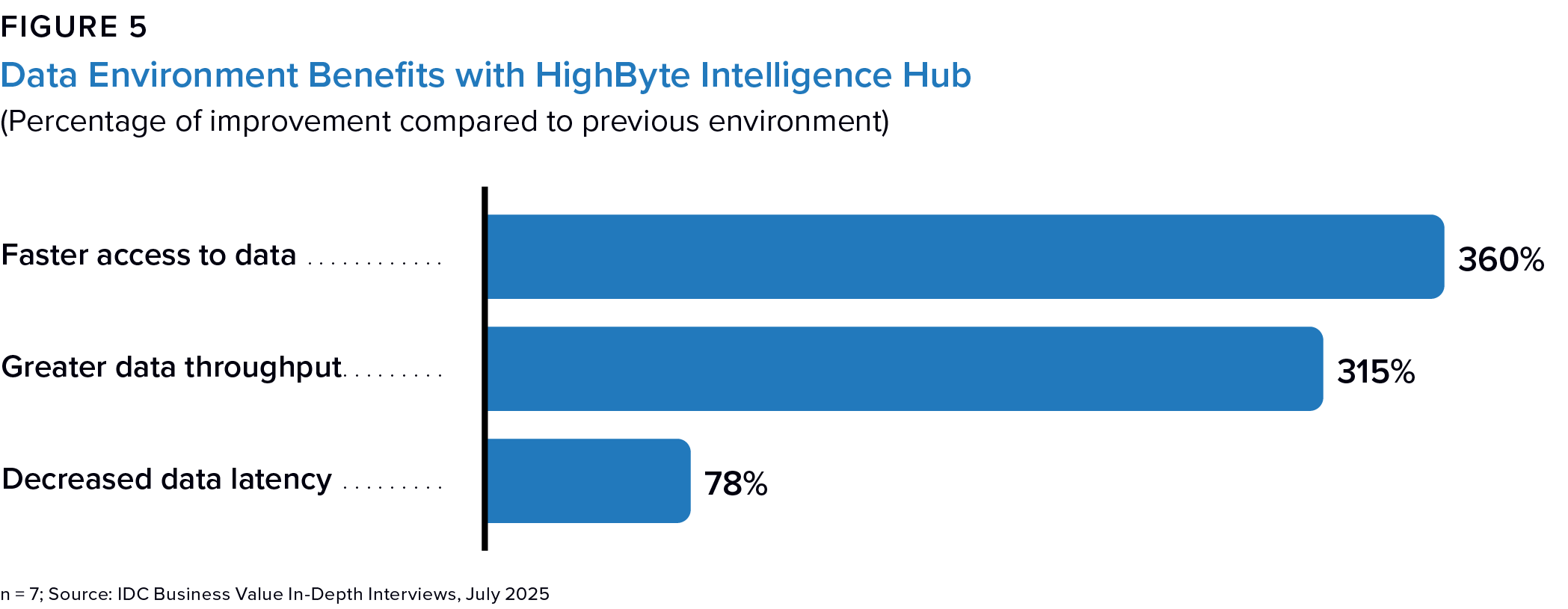
Figure 5: Data Environment Benefits with HighByte Intelligence Hub
Source: IDC White Paper, sponsored by HighByte, The Business Value of HighByte Intelligence Hub, Doc. #US53756625, October 2025.
Beyond individual roles, the study points to rising digital maturity across the organization. Teams collaborated more effectively around shared, trusted data. Customers reported a 25.5% increase in the efficiency of the floor or manufacturing teams, allowing these staff members to focus more on their core tasks. As data fluency grows, IT and OT shift from working around one another to working from the same source of truth, which is what makes broad Industry 4.0 adoption sustainable.
Building Your Business Case
Ultimately, enterprises using HighByte Intelligence Hub in the study delivered better quality industrial data at a faster rate. Customers accelerated their deployment of Industrial DataOps by leveraging reusable data models and scalable integrations across sites, allowing them to complete projects 4x faster and avoid costly errors in manufacturing like unplanned downtime and quality faults.
As one aerospace defense manufacturer shared, “We’ve increased factory utilization by gaining faster insight into operations and reducing manual data collection. Unlocking and standardizing data has led to cost savings, improved visibility, and more informed, real-time decision-making.”
Now that you understand the need for Industrial DataOps, how do you convince your management and peers?
For IT practitioners, focus on getting OT users on board with shared tools and collaboration expectations. IDC research shows that OT teams are willing adopters of software from IT when they are empowered to use it in a self-service format.
For OT practitioners, help your IT counterparts understand the nuances of industrial data, systems, and processes. Industry-specific data carries industry-specific challenges that require integration and contextualization solutions purpose-built for industrial data. DataOps toolchains are not strictly horizontal or vertical and often require a mix of best-of-breed solutions that complement existing IT solutions.
To secure funding, roll up-front costs into a budget allocated for a distinct use case, then scale and re-use the capabilities after value has been demonstrated. Note that budget decisions around Industrial DataOps software are transforming given the rise in demand for better data for AI use cases.
To measure ROI and scale your DataOps projects across sites, be sure to track direct, adjacent, and strategic benefits and metrics. Examples include:
-
Saved labor hours
-
Operational metrics resulting from the scale of business use cases like OEE, reduced unplanned downtime, improved yield, or reduced power consumption
-
Infrastructure savings resulting from local processing and technology consolidation
If your company is faced with an AI imperative, elevate data operations and management to the leadership table in 2026. Industrial DataOps impacts key data architecture decisions and must be accounted for, especially as a pre-requisite for AI readiness, reducing business risk associated with AI, and future-proofing your organization against the emergence of new strategic technologies.
Additional Resources
Industrial DataOps is not just a useful tool for basic data plumbing needs. It has the potential to afford transformational shifts in industrial data access, productivity, and innovation, as experienced and quantified by HighByte customers.
What could you achieve in your business with HighByte Intelligence Hub?
If you’re looking for additional resources on this topic, check out the following:
-
The complete IDC Business Value study
Or contact our team to schedule a custom demo for your unique business and technical ecosystem.